2013年2月23日

2/23 "Victim," "Justice and Healing in Cambodia" & "A Trip to the Moon" @ Bophana

Saturday 23, February - 4pm
@ Bophana Audiovisual Resource Center

Victim-Former Khmer Rouge
Produced by Kdei Karuna and TPO Cambodia,17 min, 2012, Khmer version with English subtitles
Victims often wish to receive acknowledgement and an apology. For perpetrators, overcoming cultural obstacles that hinder even the acknowledgement of crimes make an apology difficult to achieve. This project is a dialogue among local Cambodian communities about their role in finding justice, healing, and reconciliation.

Justice and Healing in Cambodia 
Directed by Inger Agger, 30 min, 2012, English version
The film shows how survivors can choose to deal with their personal healing process from several perspectives: by using a religious, a legal, and/or a professional therapeutic approach.


A Trip to the Moon 
Directed by Georges Méliès, 16 min, 1902, no dialogue (Restored in 2011 by Technicolor Foundation and Fondation Groupama Gan for Cinema)
A group of six scientists travels to the moon in a bullet-shaped shell that is being shot from a giant cannon. They are captured by moon-men, escape, and then return to the Earth, where their triumphant adventure is celebrated. Produced in 1902 and considered a gem of cinema, this first science-fiction movie in its original colors has been restored in 2011.

2013年2月15日

3/1, 8/22-23 3rd ICIRD @ Bangkok

3rd International Conference on International Relations and Development (ICIRD 2013)
“Beyond Borders: Building a Regional Commons in Southeast Asia”

Chulalongkorn University, Bangkok, 22-23 August 2013

Co-organized by: Master of Arts in Development Studies Program, Chulalongkorn University; Faculty of Political Science, Thammasat University; Regional Center for Social Science and Sustainable Development, Chiang Mai University; and Institute of Human Rights and Peace Studies, Mahidol University.

Call for Panel Proposals and Paper Abstracts – Submission Deadline 1st March 2013
Please send all submissions and inquiries to icird2013[atmark]icird.org
Further information on www.icird.org

Purpose
Southeast Asia is a region in rapid economic, social, political and cultural transition. Both state-led development and an increasingly liberalized market economy have characterized the region’s development trajectory. There also exists, however, a long tradition of sharing - and contesting - various “commons” between people, communities, and countries. These commons include the spheres of: the economy; the social and societal; nature and natural resources; culture and knowledge; and the digital domain. In Southeast Asia, perhaps the most well-known commons are the diverse forms of community cooperation over natural resources. The commons are not limited to this, however, and span the realm of the physical as well as the normative. In the region’s urban areas, for example, public spaces such as parks and universities are important places for peoples’ interaction and dialogue shaping various civic common values. Furthermore, at the regional level, governments attempt to cooperate through a deepening commitment to ASEAN, including in the economic, social, cultural, security and political spheres, which has the potential to either reinforce or undermine various commons across the region. In response, civil society has pushed for stronger regional common values, for example on political and civil rights, and addressing the social and environmental costs of economic growth.

A number of challenges persist in Southeast Asia of relevance to the commons. These include uneven economic development and governance across the region, political and social inequality, democratic deficits, unresolved ethnic conflicts, environmental degradation and enclosure of a range of natural resources, impacts from large-scale development projects, and human rights violations. By moving beyond the dichotomy of state-led or market-led development alone, the values, interests and institutions of the “commons” could offer transformative perspectives on development, international relations and human rights. It has been argued, for example, that a greater focus on the commons and their role in society can help enlarge freedoms, deepen democratic processes, strengthen political accountability, promote international cooperation, protect human rights, and ensure social and environmental justice.

2/16 Tell Me Lies @ Bophana

Saturday, February 16 - 4pm
@ Bophana Audiovisual Resource Center

Tell Me Lies 
Directed by Peter Brook, 118 min,1968 , English version (Restored in 2012 by Technicolor Foundation and

Fondation Groupama Gan for Cinema)
A political and rock film, scathing attack against the war of Vietnam, unreleased, from the great playwright Peter Brook. This film tries to understand the violence spiral of the war. The discussions and
testimonies about the key events show the absurdity of war, with a powerful use of satirical songs and a devastating irony.

2013年2月14日

2/22 第15回東南アジア歴史研究会

2013年2月22日(金)に、第15回東南アジア歴史研究会を下記の通り開催致します。ご興味のある方は、ご参加頂ければ幸いです。

【第15回東南アジア歴史研究会】
日時:2月22日(金) 9時30分~  
場所:東京外国語大学本郷サテライト3階セミナースペース
http://www.tufs.ac.jp/access/hongou.html
(※場所と曜日が通常とは異なっておりますので、ご注意ください。)

講読箇所
Chapitre IV: LA SECONDE HINDOUISATION DE L'INDOCHINE ET DE L'INSULINDE (du milieu du IVe au milieu du VIe siècle)_p.66
[4.La recrudescence de l’emigration hindoue et la seconde hindouisation du Fou-nan au Ve siecle.]~
[George Coedès. 1944. HISTOIRE ANCIENNE DES ETATS HINDOUISES. Hanoi (George Coedès. 1968. The Indianized States of Southeast Asia, Honolulu)]

この研究会では、主として19世紀以前の東南アジア史を、テキストを通じて学ぶことをねらいとしており、現在は、上記しましたように、ジョルジュ・セデスの文献を購読しています。学部生でこれから歴史を学びたいと思っている方、また東南アジア非学会員であっても全く構いません。東南アジア史に興味のある方であれば、どなたでも参加できますので、参加を希望する方は、佐藤恵子ke_bluye116[atmark]yahoo.co.jp までご連絡ください。

2013年2月8日

4/5, 20 カンボジア大使館スピーチコンテスト

カンボジア語スピーチコンテスト

カンボジア・日本友好60周年を迎えるために、在日カンボジア王国大使館は、「カンボジア語スピーチコンテスト」を2013年4月20日(土曜日)に大使館にて開催します。
一位から三位までは、大使からの記念品を贈呈します。
なお、決選の参加者全員は大使館から記念品を贈呈します。

参加の条件は以下の通りです。
* 40歳未満で、日本国籍を持つこと。
* 各スピーチは5分とします。テーマはカンボジアと日本に関連するものですが、政治、宗教やプロパガンダ等は禁じられます。
* 予選に合格したものに対して、4月20日にカンボジア大使館における決選に出席するために大使館から連絡します。なお、決勝に参加するための交通費は自己負担となります。
* 参加者は名前、性別、年齢、職業、電話番号、E-mailと現住所を明記の上、スピーチの全文(カンボジア語又はローマ字)を以下の方法で、4月5日までに送ってください。

郵送の場合: Khmer Speech Contest
Royal Embassy of Cambodia
8-6-9 Akasaka, Minato-ku,
Tokyo 107-0052
Emailの場合: khmerspeechcontest2013[atmark]gmail.com
Faxの場合: 03-5412-8526
締め切り: 2013年4月5日


ポスターは、大使館のホームページに掲載されています。

2013年1月31日

2/2 Cambodia @ Bophana

Saturday, February 2 - 4pm
@ Bophana Audiovisual Resource Center

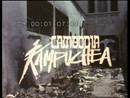
Cambodia 
Directed by Gerrand James, 57 min, 1987, English version
The film presents interviews with Prince Norodom Sihanouk in order to explain Democratic Kampuchea and the prince's life in the country.

2013年1月29日

1/30 文化・社会・メディア・クラスターフォーラム@APU

第1回CSMクラスターフォーラムを開催します。
多くの方々のご出席をお待ちしております。

■CSMクラスターフォーラム
▼開催日時:2013年1月30日(水)14:00~15:50
▼場所:SPR8, B棟5階、立命館アジア太平洋大学
▼発表者:APS准教授 笹川秀夫氏
▼発表タイトル:
「近現代のカンボジア仏教をめぐる包括的研究を目指して」

▼要旨:東南アジア大陸部における上座仏教の研究は、内戦や社会主義化にともなう混乱から無縁だったタイを中心に進められてきた。しかし近年、他の国や地域で研究環境の劇的な改善が見られる。カンボジア仏教についても、主に英語圏で新たな成果が出てきているものの、依然として検討すべき課題は多い。本発表では、植民地期以降のカンボジア仏教の変遷を中心に、発表者が進めている個人および共同研究の成果と進捗状況について報告したい。あわせて、僧侶らが深く関与した教育政策や言語政策についても言及する。

As previously announced, we are soon to run the first CSM Cluster Forum.
We look forward to seeing as many people as possible attend.

■"Culture, Society, and Media" Cluster Forum details
▼Forum date/time: Wednesday, 30 January 2013, from 14:00 to 15:50
▼Place: SPR8, 5th Floor, Building B, Ritsumeikan Asia Pacific University
▼Presenter: Associate Professor SASAGAWA Hideo (APS)
▼Presentation title: "In Search of a Comprehensive Study on Modern and Contemporary Cambodian Buddhism"

▼Abstract: Studies on Theravada Buddhism in mainland Southeast Asia was executed mainly on the Thai cases, where has been free from the civil wars and political turmoil of establishing socialist regimes. Nowadays, however, research environment at other countries and regions becomes drastically improved. As for Cambodian Buddhism, new achievements mostly in English can be seen, yet further scrutiny on many issues is necessary. This presentation will talk about resent results and advancement of my personal and group research on the vicissitudes of Cambodian Buddhism since the French colonization. Besides, the educational and linguistic policies in which Buddhist monks played vital roles will be mentioned.